
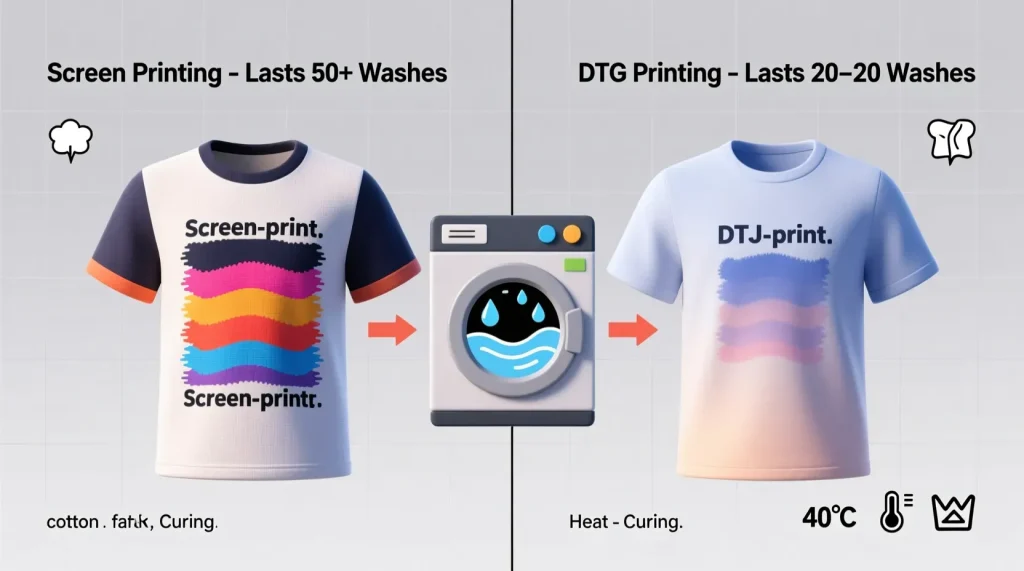
Screen Printing vs DTG for Custom Shirts is a decision many brands face when balancing color fidelity, durability, and turnaround, a central question in screen printing vs DTG evaluations. This overview explains how each method works and frames the decision with regard to custom shirt printing methods. Screen printing durability is renowned for long-lasting color, while DTG print quality excels with rich gradients and photographic detail. The choice often hinges on order size, design complexity, and fabric compatibility, affecting cost and lead times. By mapping project goals to these methods, you can optimize both the product and your production workflow.
To frame the conversation with different terms, think of traditional silkscreen techniques versus modern digital garment printing. In this framing, we compare scalable color blocks against high-detail, color-rich artwork on textile substrates. For teams exploring on-demand options or limited runs, digital inkjet-on-fabric approaches offer fine detail and rapid iteration, while screen-based methods deliver bold, durable color blocks. Understanding these related concepts helps designers choose the best fit for each project without getting lost in jargon.
Screen Printing vs DTG for Custom Shirts: A Practical Side-by-Side
When evaluating screen printing vs DTG for custom shirts, a practical side-by-side look helps you map designs to production realities. Screen printing excels in bold color blocks and logo-heavy artwork, delivering durable results that stand up to heavy wear. For large runs, the upfront setup cost pays off quickly, and per-unit costs drop as volume increases, making it a reliable backbone for branded apparel campaigns.
DTG, by contrast, shines in on-demand scenarios and designs with gradients, photographs, or high color detail. It’s well-suited for small batches or limited drops where quick turnaround matters. The soft hand feel and ability to reproduce complex artwork without multiple screens make DTG a flexible option when your catalog evolves rapidly or you need many designs without committing to extensive screen setups.
Durability and Quality: How Screen Printing Durability Compares with DTG Print Quality
A core consideration in screen printing vs DTG is durability. Screen printed designs are bonded to the fabric through a curing process that enhances longevity, often outperforming other methods under heavy use and repeated washing. When properly calibrated, screens and inks deliver vibrant, long-lasting color that remains consistent across many garments.
DTG print quality has advanced significantly, offering rich color gamut and fine detail, especially for photographic imagery. However, its durability can hinge on pretreatment, ink chemistry, and fabric choice. Consumers may notice differences in wear on high-friction areas, which means DTG requires careful garment handling and appropriate care to preserve vibrancy over time.
Choosing Custom Shirt Printing Methods for Large Runs and Bulk Branding
For large orders and long-term branding campaigns, screen printing generally offers the most cost-efficient pathway. The setup investments in screens and inks are offset by lower per-unit costs as volume grows, especially when designs stay within a manageable color count. This makes screen printing the preferred choice for school leagues, corporate merchandise, and mass-market t-shirts where consistency is key.
If your lineup includes frequent art changes or color-rich designs, DTG remains appealing for bulk orders that require flexibility. While per-unit costs stay relatively stable for complex images, the ability to switch designs quickly without producing new screens helps keep inventory lean and time-to-market fast, which is valuable for promotions and seasonal drops.
Color, Detail, and Fabric Compatibility: Matching Techniques to Materials
Color handling is a central factor in custom shirt printing methods. Screen printing delivers punchy, saturated colors with sharp edges, ideal for strong typography and uniform color blocks. For gradients or photorealistic imagery, designers may need multiple screens or halftone techniques, which can complicate production but still deliver consistent outcomes on the right substrates.
DTG excels with complex color work and subtle shading, enabling photorealistic representations and smooth gradients. Nevertheless, achieving peak vibrancy on dark fabrics often requires a white underbase and additional post-treatments. Fabric composition matters too: DTG tends to perform best on 100% cotton or high-cotton blends, while screen printing offers broader substrate compatibility with ink formulations tuned for each fabric.
Speed, Turnaround, and Operational Considerations in Screen Printing vs DTG
Operationally, screen printing rewards predictable, scalable production. With large runs, you can plan workflows around set-up times and color separations, delivering consistent results across thousands of units. The efficiency of this method makes it a staple for brands that prioritize a reliable timetable and uniform appearance across all items.
DTG brings flexibility to the production floor, enabling on-demand printing, rapid iterations, and a broader range of design possibilities without extensive setup. While maintenance and ink management influence ongoing costs, the ability to switch designs quickly supports dynamic inventory and testing new markets, aligning well with e-commerce strategies and promotional campaigns.
Decision Framework and Hybrid Strategies: When to Combine Screen Printing and DTG
A practical decision framework helps you compare screen printing vs DTG for Custom Shirts by aligning project goals with method strengths. Start with order size: large volumes with simple color schemes favor screen printing, while small, color-rich runs lean toward DTG. Then assess design complexity and fabric context to determine which method preserves the artwork with the best durability and fidelity.
Hybrid strategies often yield the best of both worlds. Use screen printing for bulk units featuring bold branding and color-block designs, and reserve DTG for limited editions, photorealistic art, or on-demand drops. This approach balances screen printing durability and cost efficiencies with DTG’s DTG print quality for intricate visuals, offering a scalable pathway that aligns with evolving product lines and customer expectations.
Frequently Asked Questions
What is the difference between screen printing vs DTG for Custom Shirts?
Screen printing vs DTG for Custom Shirts: Screen printing uses separate screens for each color, delivering bold, durable results and high efficiency for large runs. DTG uses a direct-to-garment inkjet-like process that excels at full-color images with fine detail and a soft hand feel, ideal for small runs or designs with gradients. Choose based on run size, color complexity, and fabric type.
How does DTG print quality compare to screen printing durability on common fabrics?
DTG print quality shines with complex colors and photographic detail on cotton-rich fabrics, especially when backed by quality pretreatment. Screen printing durability tends to be higher for long-wear items, as ink bonds firmly through curing and can endure many washes. The best choice depends on your design, fabric, and expected use.
What are the best practices for selecting among custom shirt printing methods?
A practical approach to custom shirt printing methods involves evaluating order size, design complexity, fabric compatibility, and turnaround needs. Screen printing is often best for large runs with bold colors, while DTG is well-suited for multi-color artwork and small batches. Consider a hybrid strategy if you have both bulk logos and intricate art.
For large-volume orders, is screen printing vs DTG more cost-effective for custom shirts?
For large-volume orders, screen printing typically becomes more cost-effective per shirt due to lower per-unit costs after setup. DTG offers lower upfront setup but higher unit costs on a per-shirt basis, though it saves time for small runs or designs with many colors. Color count and production timelines should guide the decision.
Can DTG print quality be optimized on dark fabrics, and when should screen printing be preferred for custom shirts?
DTG print quality on dark fabrics often requires a white underbase and pretreatment to achieve bright colors, which can add cost and steps. Screen printing on dark fabrics can deliver vibrant results with fewer pretreatment steps, making it a preferred option when vibrancy and efficiency matter for dark garments.
Is a hybrid approach a good strategy to combine screen printing vs DTG for custom shirts?
Yes. A hybrid approach leverages the strengths of both methods: use screen printing for bulk, color-stable logos and durability, and DTG for limited editions, photo-quality artwork, or designs with gradients. This strategy can optimize cost, lead times, and design fidelity.
| Aspect | Screen Printing | DTG | Notes |
|---|---|---|---|
| Overview | Traditional screen-based method pushing ink through a mesh screen; highly durable and vibrant results, especially for bold colors. Best suited for large runs. | Direct-to-garment printing uses water-based inks applied directly onto fabric with an inkjet-like printer; excels at full-color images with a soft hand and on-demand capability. | Key trade-off: Screen printing scales well; DTG offers flexibility for small batches and complex artwork. |
| How it works | Each color requires a separate screen; multi-color designs require more screens and setup. | No screens needed; relies on CMYK-like inkjet system; pretreatment may be required for dark fabrics. | Workflow differences impact lead times and setup costs. |
| Strengths | Excellent color saturation, durability, and Pantone color accuracy; cost-effective at scale. | Great for gradients and photorealistic artwork; soft hand feel; good for small batches and on-demand. | Choose based on design complexity and production volume. |
| Limitations | Less efficient for very detailed or photographic designs; color separations and screens add setup and production time. | Higher per-unit cost on large runs; dark fabrics require pretreatment; color vibrancy on light fabrics can differ. | Consider substrate and color requirements when deciding. |
| Color & Design Complexity | Best for bold blocks of color and solid shapes; precise Pantone matching; multiple screens for complex designs. | Excellent for gradients, subtle shading, and photorealistic imagery; no need for screens, but may require pretreatment. | Artwork should be prepared with limitations in mind. |
| Fabric Compatibility | Works on cotton blends and some synthetics; ink chemistries adapted to substrate. | Favors 100% cotton or high cotton content blends; blends and synthetics may require pretreatment and yield variable results. | Fabric choice significantly influences results. |
| Durability & Washability | Typically very durable; inks cured; resists cracking and fading; suitable for active use. | Durable with proper inks and pretreatment; may wear more in abrasion areas; follow care guidelines. | Proper care extends longevity for both methods. |
| Applications & Use Cases | Large orders with simple color blocks (logos, banners, team wear). | Small runs, on-demand, full-color artwork, limited editions. | Hybrid approaches can leverage strengths of both methods. |
| Environmental & Operational Considerations | Waste from screens and emulsions; energy use; solvent handling; planning required. | Lower chemical usage per unit on small runs; energy and water use for printers; routine maintenance. | Sustainability depends on workflow optimization and equipment upkeep. |
Summary
Conclusion: Screen Printing vs DTG for Custom Shirts presents a practical balance of cost, speed, durability, and design fidelity. Screen printing delivers enduring color and cost efficiencies at scale, making it the backbone of many branded apparel lines. DTG offers rich color reproduction, flexibility for small runs, and rapid turnarounds that fit modern e-commerce workflows. Designers and business owners should map their project requirements to the strengths of each method—and consider a hybrid approach when appropriate to maximize product quality, customer satisfaction, and bottom line.